
 Share on Facebook
 Share on LinkedIn
 Share on WhatsApp
Diamond Buying Guides: Everything You Need to Know Before Buying a Diamond
Buying a diamond is an important decision, whether you are choosing an engagement ring, wedding jewelry, anniversary gift, or a timeless piece for your collection. With so many diamond shapes, qualities, sizes, and price points available, understanding the basics can help you make a confident decision.
Our Diamond Buying Guide explains the most important factors to consider before purchasing a diamond, including the 4Cs, diamond shapes, certification, diamond types, and pricing.
Understanding the 4Cs of Diamonds

The quality and value of a diamond are commonly evaluated through the 4Cs: Cut, Color, Clarity, and Carat Weight.
1. Cut
Cut is one of the most important characteristics because it determines how effectively a diamond reflects light.
A well-cut diamond can appear brighter and more brilliant, while a poorly cut diamond may look dull even when it has excellent color and clarity.
2. Color
Diamond color refers to how much color is visible in a stone. Traditionally, diamonds are graded from D to Z, with D representing the highest color grade.
For buyers looking for a bright and premium appearance, higher color grades can be attractive. However, slightly lower grades can also offer excellent beauty while providing better value.
3. Clarity
Clarity measures the presence of internal inclusions and external blemishes within a diamond.
Higher-clarity diamonds generally have fewer visible imperfections. However, many diamonds with lower clarity grades can still appear completely clean to the naked eye, making them a practical choice for buyers focused on value.
4. Carat Weight
Carat refers to the weight of a diamond, not simply its visual size.
Two diamonds with the same carat weight can look different in size depending on their shape, cut, and proportions. Therefore, carat weight should be considered together with the other 4Cs.
Choosing the Right Diamond Shape
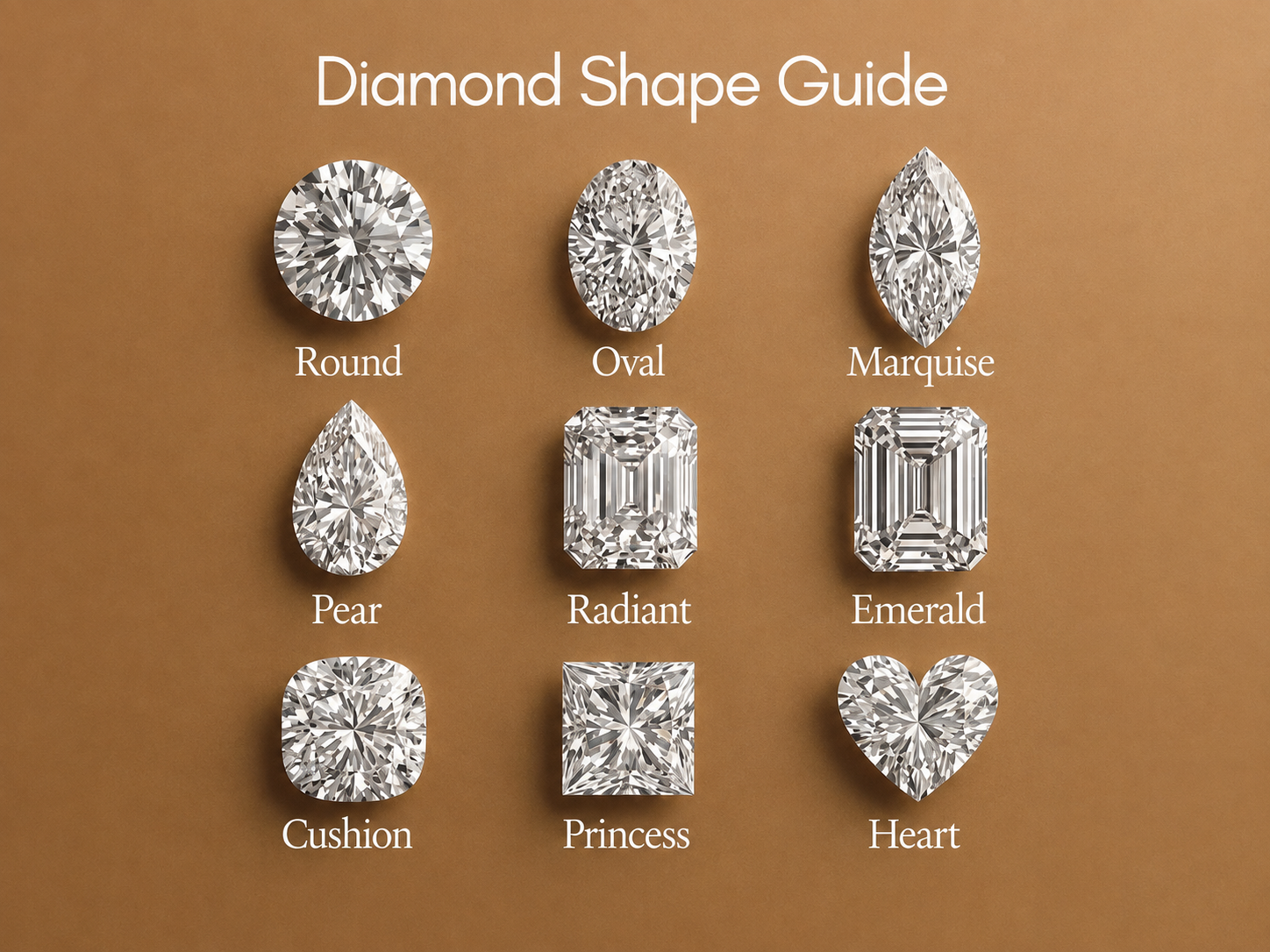
Diamond shape is another important consideration because it strongly influences the overall appearance of a jewelry piece.
- Popular diamond shapes include:

- Round – classic and highly brilliant
- Oval – elegant and creates an elongated appearance
- Cushion – soft, romantic, and vintage-inspired
- Princess – modern and geometric
- Emerald – sophisticated with a clean step-cut appearance
- Pear – distinctive and elegant
- Marquise – elongated and dramatic
- Radiant – combines brilliance with a rectangular or square outline
The best diamond shape ultimately depends on personal style and the design of the jewelry.
Natural Diamonds vs. Lab-Grown Diamonds
Today's buyers can choose between natural diamonds and lab-grown diamonds.
Natural diamonds are formed naturally over millions or billions of years beneath the Earth's surface. Lab-grown diamonds are created using advanced technology and have essentially the same chemical and physical properties as natural diamonds.
The right choice depends on your priorities, including budget, preferences, sustainability considerations, rarity, and long-term value expectations.
Why Diamond Certification Matters
A diamond grading report provides important information about the stone's characteristics.
When purchasing a significant diamond, buyers should look for a grading report from a reputable independent gemological laboratory. The report can provide details about the diamond's carat weight, color, clarity, cut, measurements, and other characteristics.
Certification makes it easier to compare diamonds and understand exactly what you are purchasing.
How to Choose the Best Diamond for Your Budget
A common mistake is to focus on carat weight alone. Instead, consider how the 4Cs work together.
For example, you may be able to choose a slightly lower clarity or color grade while selecting a superior cut, resulting in a diamond that looks beautiful without unnecessarily increasing the budget.
A smart buying strategy is to prioritize the characteristics that are most visible to you.
Final Diamond Buying Tips
Before purchasing a diamond, remember these important tips:
Understand the 4Cs.
Choose a shape that matches your style.
Compare diamonds using their grading reports.
Look at the diamond under different lighting conditions.
Consider both natural and lab-grown options.
Compare quality and value rather than carat weight alone.
Purchase from a trusted jewelry professional.
Make sure the diamond fits your overall jewelry design and budget.

Conclusion
Choosing a diamond doesn't have to be complicated. By understanding the 4Cs, diamond shapes, certification, diamond types, and pricing, you can make a more informed decision and select a stone that offers the right balance of beauty, quality, and value.
Whether you're looking for a classic round diamond, an elegant oval, or a distinctive fancy shape, the right diamond is the one that fits your style, expectations, and budget.